
At present, Robert Hooper serves as the President. It is puzzling how he has managed to keep this role despite receiving the fewest votes among the elected officials. He has been in this position for more than four years.
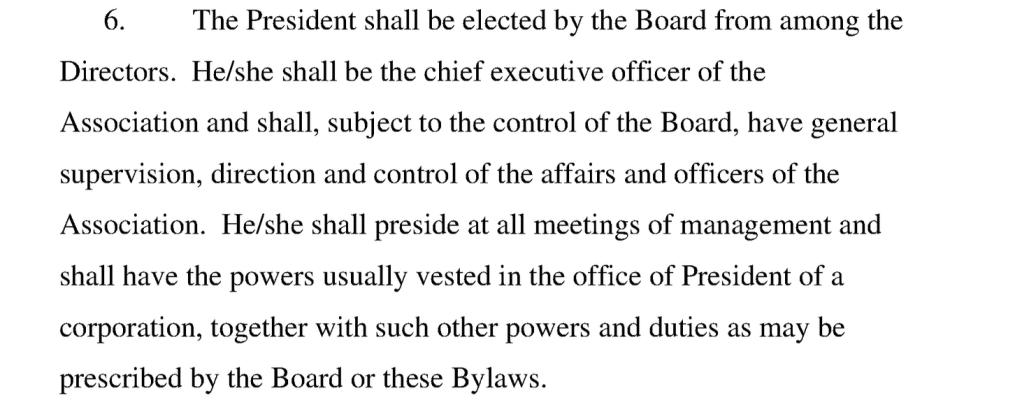
The President on a Board of Directors for a property owners association should provide leadership, oversight, and coordination for the board and the community it serves.
I wish I could claim that Mr. Hooper has been acting in that manner. However, I cannot make that assertion based on what I have seen.
Mr. Hooper has had to apologize on several occasions to various community members for his disrespectful remarks towards them during meetings.
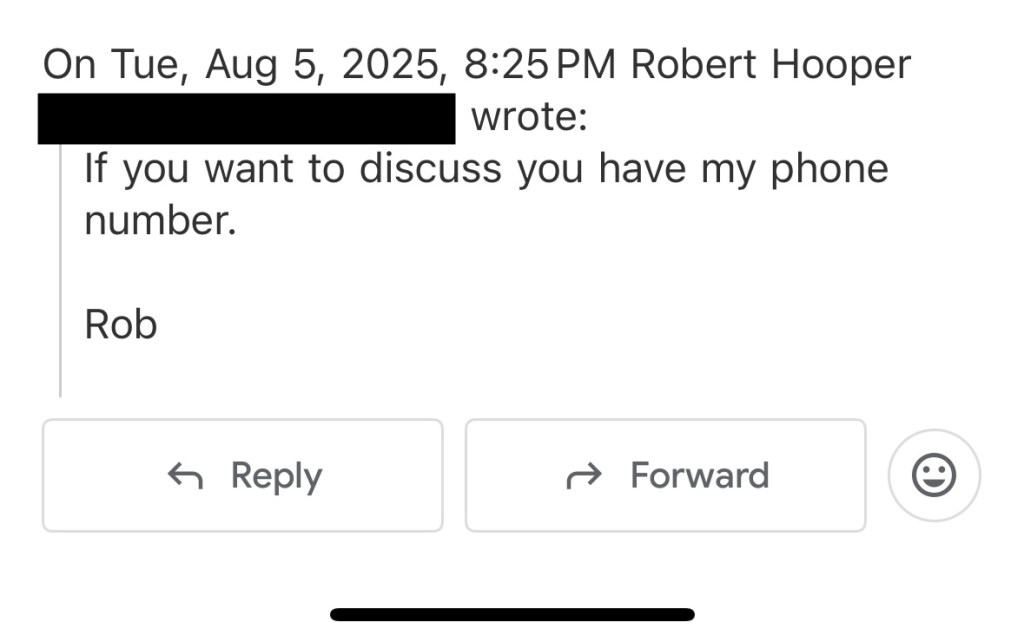
Mr. Hooper is unwilling to openly discuss any community concerns; he always prefers to have private discussions.
Mr. Hooper often informs members that they can contact him if they wish to add something to the Agenda. In July, a member asked for an item to be included that would clarify our election process and address some issues from the last election. As the sitting President, Mr. Hooper has the final say on what goes on the agenda. In lieu of adding an item to the agenda that would regain trust, he chose to add absolutely nothing! They reviewed minutes from three prior meetings and gave a road maintenance briefing.
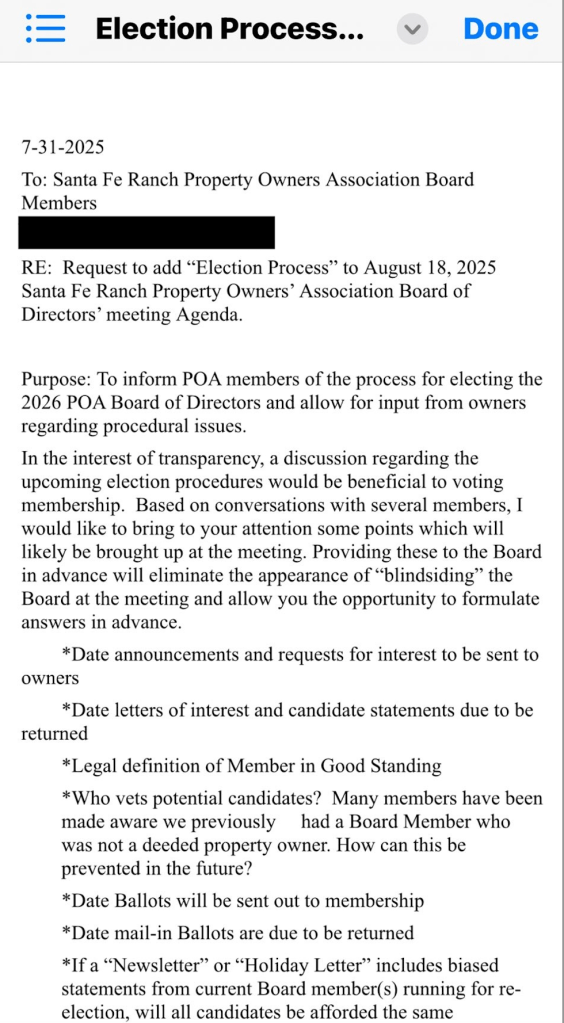
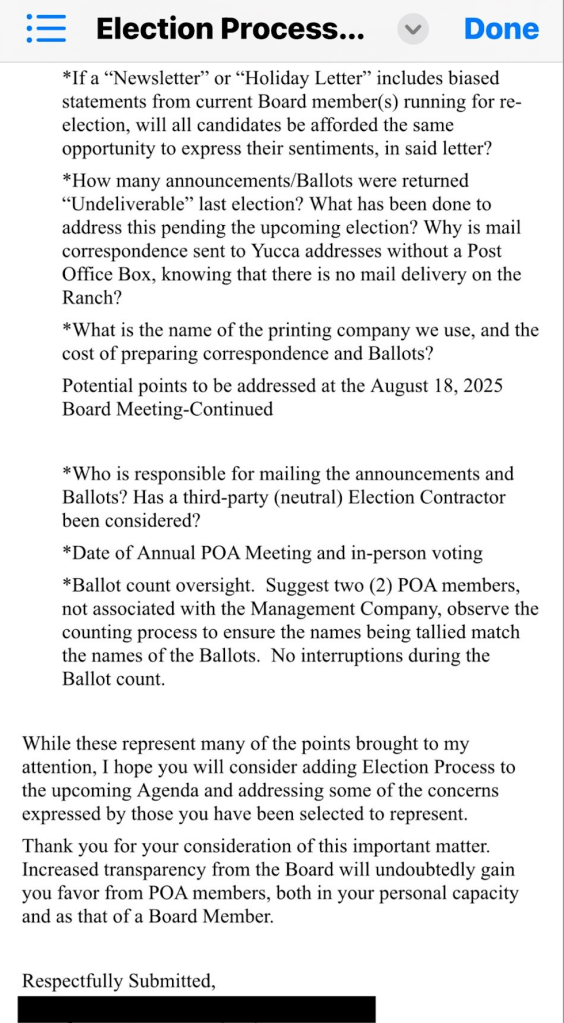
Adding these items the Agenda would have gone a long way in regaining the communities trust.
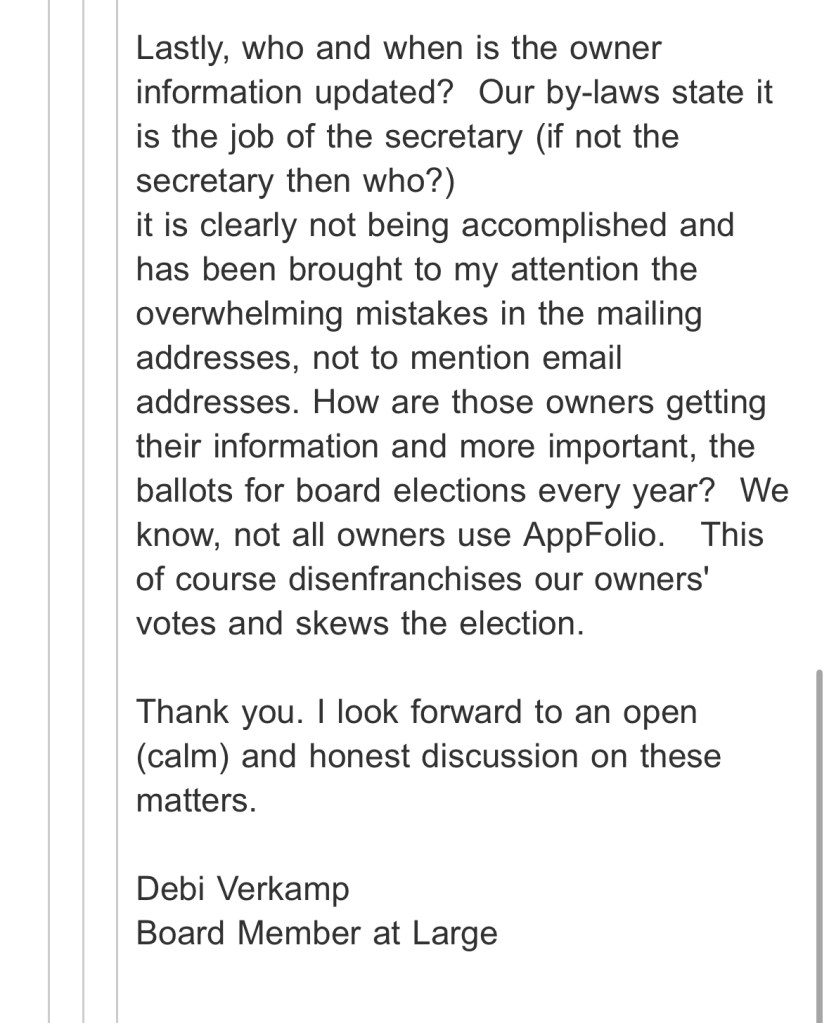
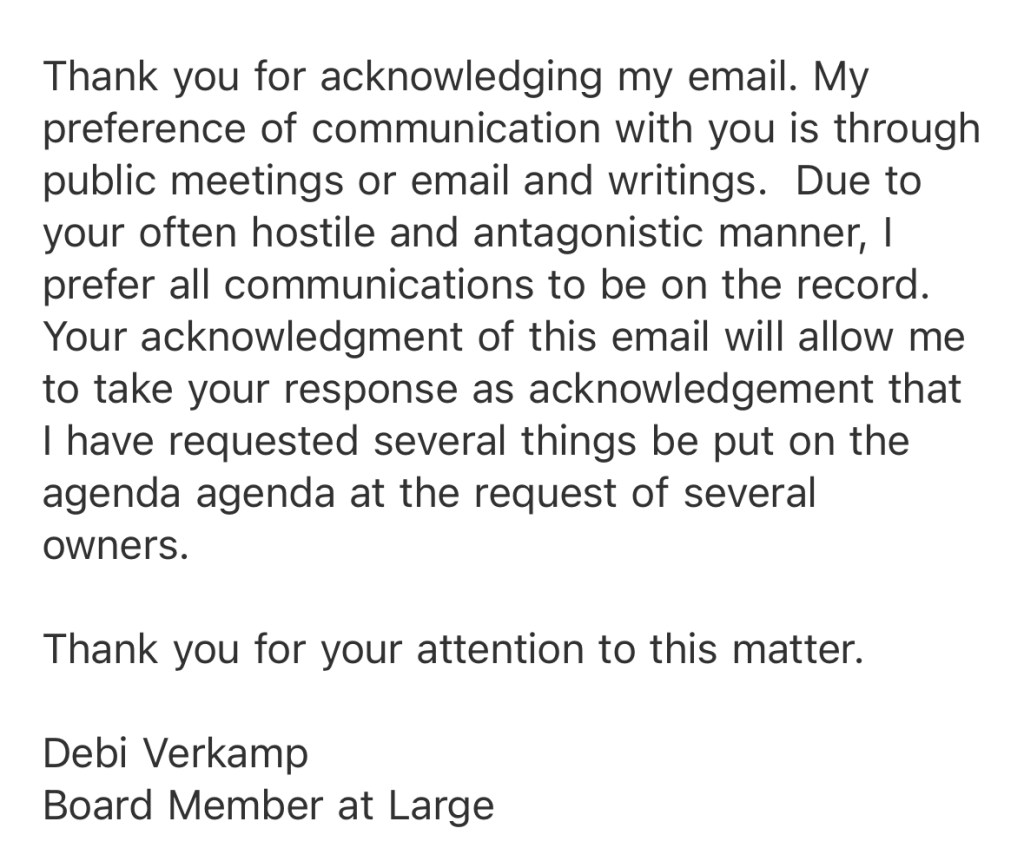
A sitting board member requested items be added to the agenda. She was told to “call him”. As stated above, nothing was added. The email exchange is below.

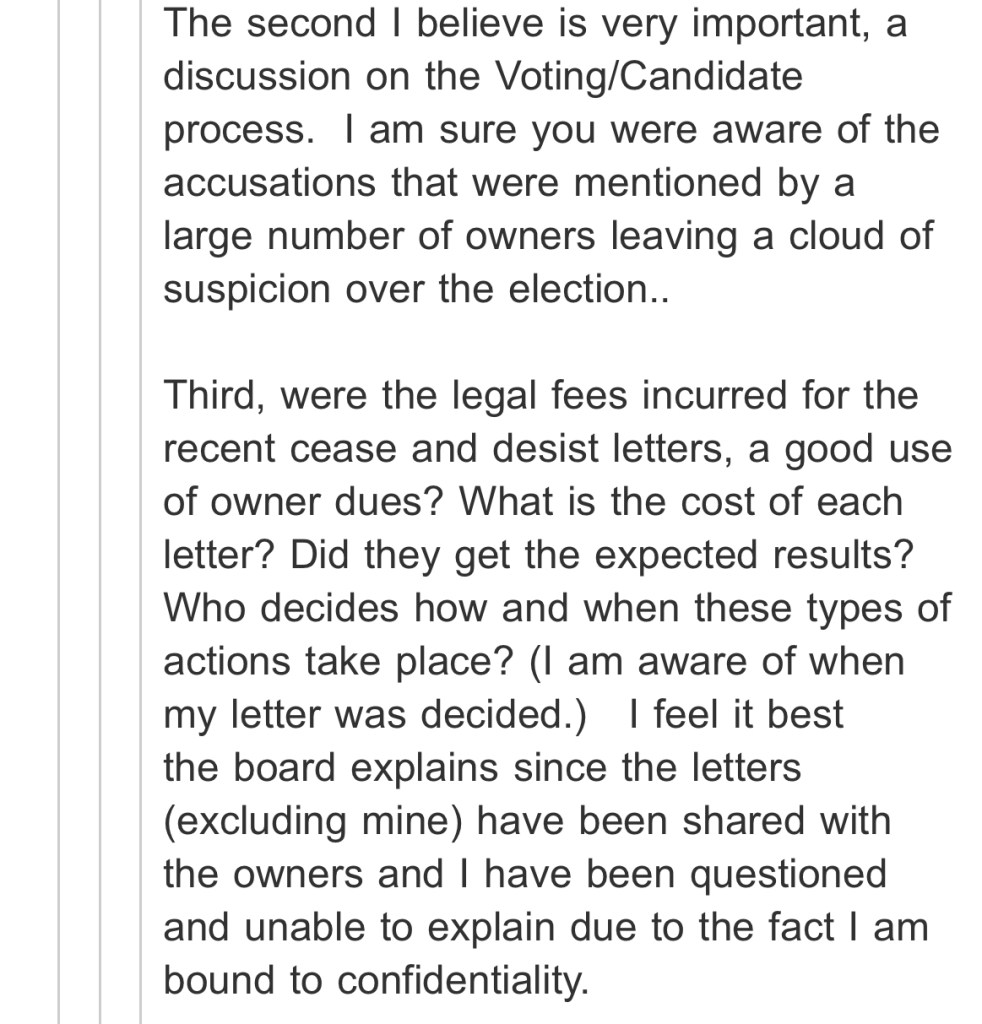
I believe that Mr. Hooper has clearly neglected his Fiduciary Duty, and without an ethical property management company to hold him accountable as the members have requested, this will persist. Below is a list of Fiduciary Duties that must be followed. Mr. Robert Hooper has let down his community and his responsibilities as President.
I do not believe Mr. Hooper has done any of the things he volunteered to do. It feels more like he just likes the title and the power. He frequently uses board meetings to boost his own ego and receive praise from others. This year, nothing significant has been achieved, apart from squandering our dues on legal fees in efforts to intimidate owners.
Practical Implications for the President
- Leadership Role in Fiduciary Responsibility: As the leader of the board, the president establishes the standard for fiduciary behavior, motivating fellow board members to adhere to these responsibilities and promoting a culture of openness and accountability.
- Collaboration with Professionals: The president may collaborate with legal advisors, accountants, or property managers to guarantee that decisions align with fiduciary standards, particularly regarding intricate matters such as reserve funding or legal disputes.
- Balancing Interests: The president is tasked with managing conflicting interests (for instance, budget-conscious owners versus essential repairs) while ensuring that decisions serve the best interests of the entire community.
The fiduciary duty of the president of a property owners association board of directors refers to the legal and ethical obligation to act in the best interests of the association and its members. As a fiduciary, the president must prioritize the community’s welfare over personal interests and adhere to specific standards of conduct. These duties, which are generally shared by all board members but may be emphasized in the president’s leadership role, are rooted in common law principles and often outlined in the association’s governing documents (e.g., bylaws, CC&Rs) and state statutes. The fiduciary duties typically include the duty of care, duty of loyalty, and duty of obedience. Below is a detailed breakdown of these responsibilities as they apply to the president:
- Duty of Care
The duty of care requires the president to act with diligence, prudence, and reasonable skill in managing the association’s affairs.
Informed Decision-Making: The president must make decisions based on adequate information, including reviewing relevant documents (e.g., financial reports, contracts, or legal advice) and consulting with experts when necessary (e.g., attorneys, accountants, or engineers).
Example: Before approving a major repair project, the president ensures the board reviews multiple vendor bids, assesses the project’s scope, and evaluates its impact on the association’s budget.
Active Participation: The president must actively engage in board activities, attend meetings, and stay informed about community issues, governing documents, and applicable laws.
Reasonable Oversight: The president oversees the implementation of board decisions, ensuring tasks (e.g., maintenance or rule enforcement) are carried out effectively, whether by board members, committees, or a property manager.
Prudent Leadership: The president should exercise the care that a reasonably prudent person would in similar circumstances, avoiding reckless or negligent actions that could harm the association.
- Duty of Loyalty
The duty of loyalty requires the president to act in the best interests of the association, prioritizing its needs over personal gain or the interests of specific individuals.
Avoiding Conflicts of Interest: The president must disclose any personal or financial interests that could conflict with the association’s goals and recuse themselves from related decisions.
Example: If the president owns a landscaping company, they must not influence the board to hire their company without transparent bidding and board approval.
Impartiality: The president must treat all community members fairly, enforcing rules consistently and avoiding favoritism or discrimination.
Example: When addressing a homeowner’s violation, the president ensures the enforcement process follows the same procedures applied to all residents, regardless of personal relationships.
Confidentiality: The president must protect sensitive information, such as financial records or resident disputes, and avoid using it for personal benefit.
Good Faith: All actions and decisions must be made honestly and with the intent to benefit the entire community, not just a select group.
- Duty of Obedience
The duty of obedience requires the president to ensure the association operates within the scope of its governing documents, state and federal laws, and the board’s established policies.
Compliance with Governing Documents: The president must ensure board actions align with the association’s bylaws, CC&Rs, and other rules.
Example: If the bylaws require a homeowner vote for major assessments, the president ensures this process is followed before approving a special assessment.
Adherence to Laws: The president must ensure compliance with applicable state HOA laws, fair housing regulations, and other legal requirements.
Example: The president ensures the association’s policies do not violate fair housing laws by discriminating based on protected characteristics like race or disability.
Fulfilling Association’s Purpose: The president must guide the board to act in ways that further the association’s mission, such as maintaining property values, ensuring community safety, and fostering a harmonious living environment.
 Susan Feels Really Peeved Over Abuse
Leave a comment